

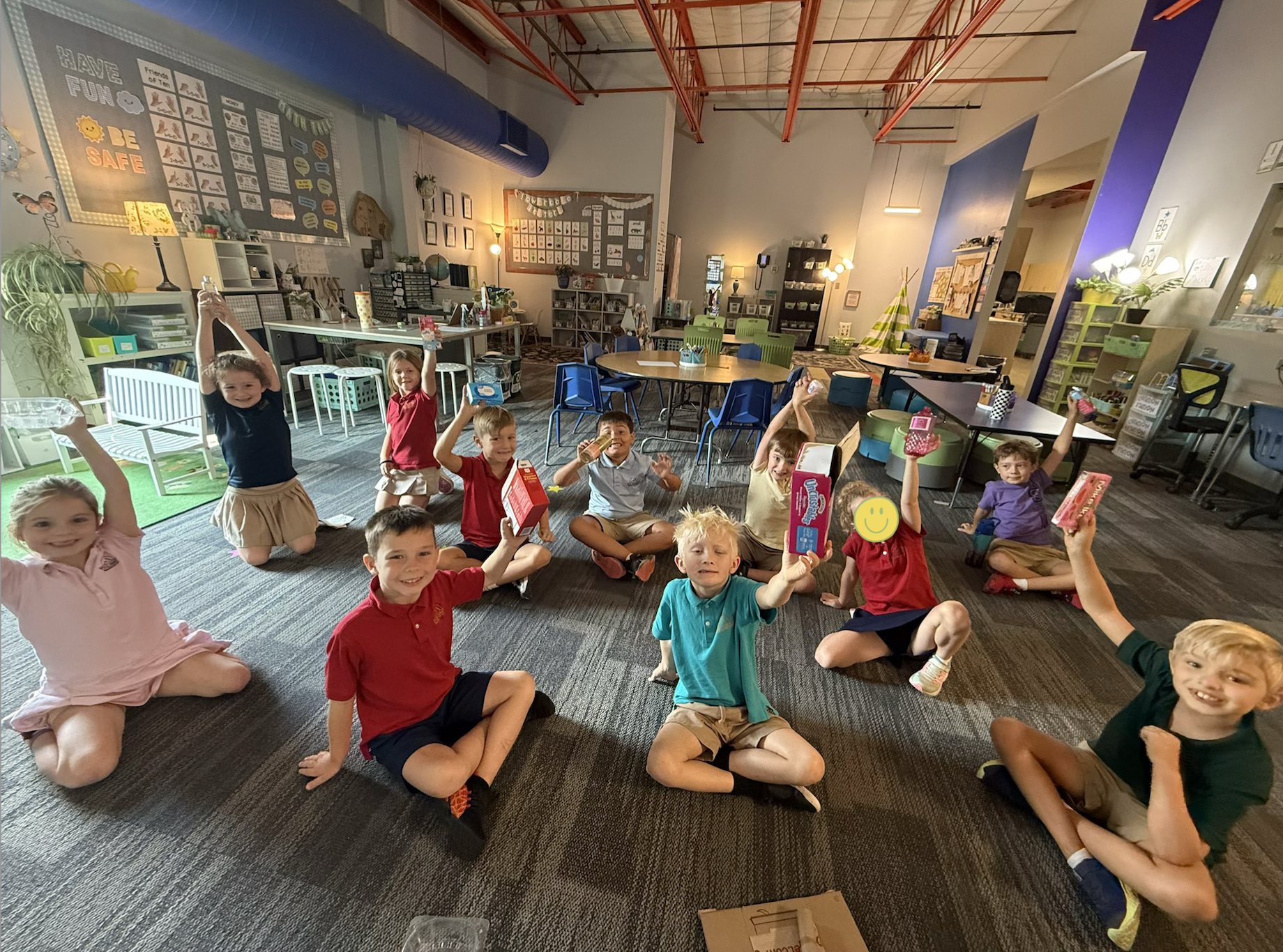
First graders have just begun learning about landfills and the important ways we can help reduce the amount of trash that ends up there! We began by reading the nonfiction book Where Does All the Garbage Go? In the book, we learned that landfills are places where our garbage is buried and that they have limited space. We also discovered that nearly half of the items people throw away could stay out of landfills if they were recycled or composted instead. By reducing, reusing, and recycling, we can help conserve natural resources, save energy, and keep our Earth cleaner.
We also learned the meaning of the word litter and discussed why it is important to throw trash away properly. Students talked about how litter can harm animals, pollute our environment, and make neighborhoods less beautiful. After our discussion, everyone put on gloves and headed outside to become environmental helpers! Together, we cleaned up litter around our big backyard, helping keep our play area clean, beautiful and safe for all creatures!
Recycling
After watching a virtual field trip video, first graders discussed which materials can be recycled. We learned that clean, dry paper, plastic, metal, and cardboard are commonly recyclable in commercial recycling programs like the one we use at The Summit and in many of our homes. We discussed how glass and plastic bags are recyclable only when delivered to the appropriate place. Commercial recycling programs do not pick up glass because it can be dangerous for workers who handle recyclable materials, so they must be dropped off at one of the Springfield recycling centers. Plastic bags such as grocery store bags can become tangled in recycling machines, so they should never be mixed with other recyclables. They must be dropped off a bag recycling station located inside many grocery stores. Did you know that there is one of these stations located inside the entrance of the Walmart nearest to our school?
Students identified the recycling symbol and discussed how the three arrows represent a continuous cycle of collecting, processing, and making new products from used materials. Students each selected a recyclable item from our Creation Station materials (where Ms. Ursino saves clean recyclables to use for crafts during inside recess and Friday Free Choice) and searched for the recycling symbol before sorting the items by material type. To practice what we learned, students completed an independent cut-and-paste activity where they sorted different recyclable items by material.
Reusing
We also explored another important “R”: reuse! Instead of throwing away plastic soda bottles, we gave them a brand-new purpose by creating colorful sensory bottles. Students filled their bottles with water, glitter, beads, and other fun materials to create calming sensory tools. This activity showed that many everyday items can be used again in creative ways instead of being thrown away. Reusing materials helps reduce waste, saves resources, and gives old items a second life!


