Social-emotional learning (SEL) is essential for the emotional and social development of kindergarteners. At this stage, SEL helps young learners recognize and understand their own emotions, manage their behavior, and develop empathy for others. In our classroom, kinde rgarteners engage in activities such as discussing feelings with visual aids, reading books about emotions, and role-playing social scenarios. These activities assist children in identifying and expressing their feelings appropriately while building self-awareness and self-regulation, which are vital for their overall emotional well-being.
In addition to fostering individual emotional growth, SEL emphasizes the development of positive relationships and responsible decision-making. Through collaborative activities, group discussions, and structured play, children practice essential skills like sharing, cooperating, and resolving conflicts. These experiences not only cultivate a sense of community and empathy among peers but also prepare children for future social interactions. By integrating SEL into our daily routine, we create a supportive environment where children can learn to navigate their emotions and relationships effectively, laying a solid foundation for their academic and personal success.

Currently, in SEL, we are focusing on the book series “A Little Spot of Emotion.” Each book in the series explores a different emotion. Kindergarten students relate to, compare, make connections with, and learn from each “emotion spot.” We began with “A Little Spot of Feelings,” which introduces various emotions. In this story, the Scribble Spot acts as an emotion detective, teaching us about how emotions translate into feelings. The Scribble Spot also demonstrates how facial expressions and body language are interconnected with our emotions.
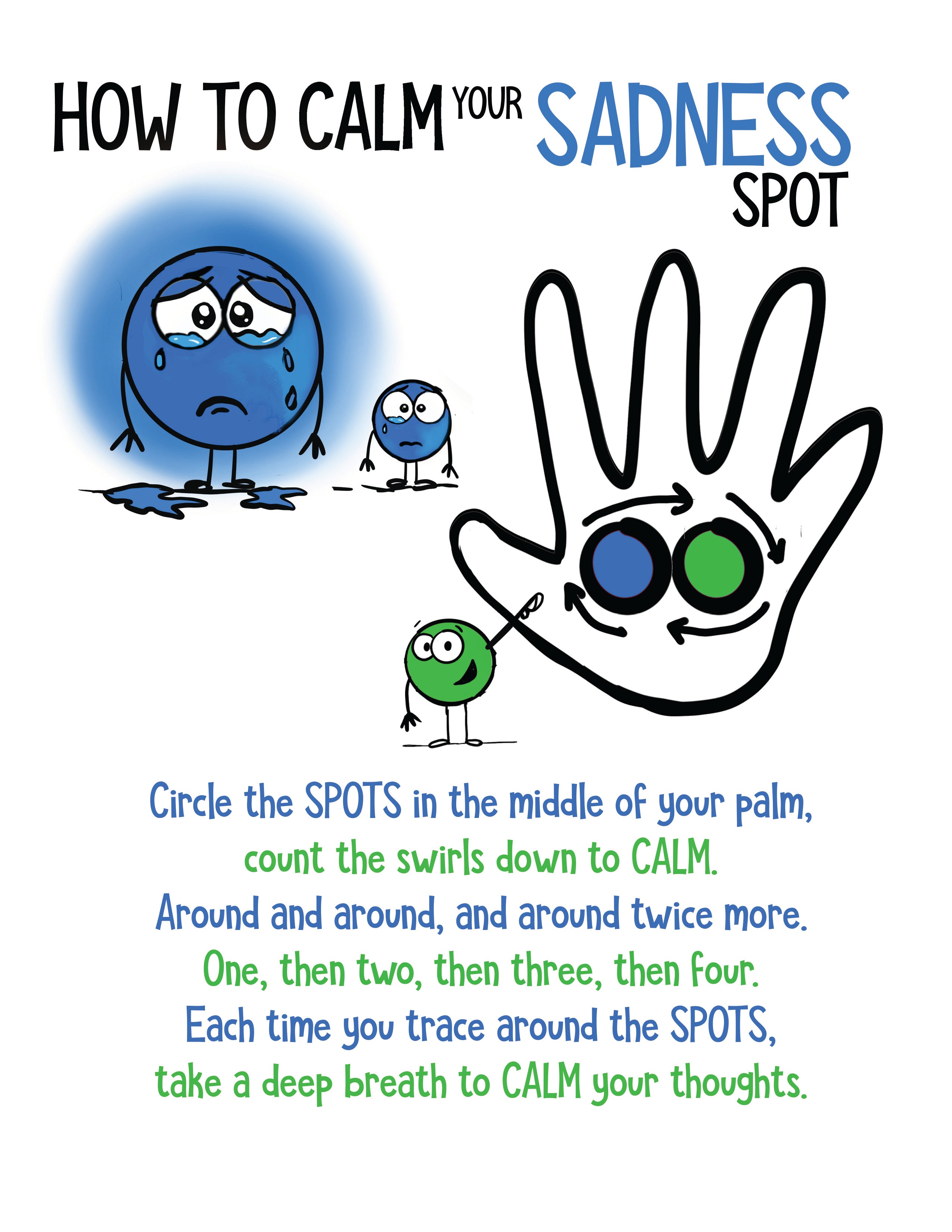
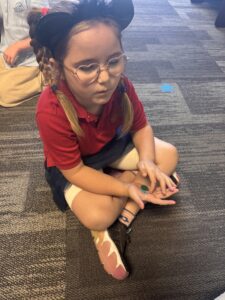
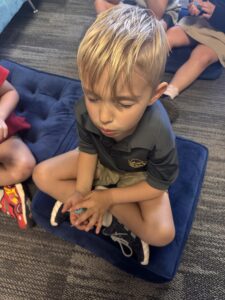
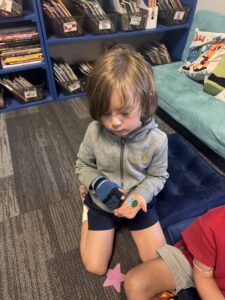
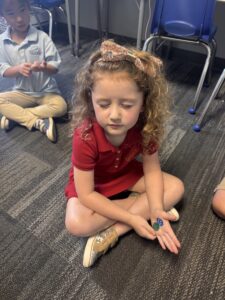
Today, we read the books “A Little Spot of Sadness” and “A Little Spot of Calmness.” The story about sadness teaches students to visualize their sadness as a “sadness spot” to manage it more effectively. The book guides them through handling their sadness spot when they become overwhelmed for too long, and it emphasizes how to support others in dealing with their own sadness spots. In the story about calmness, students discover that being calm is a powerful way to help alleviate sadness. They learn techniques for achieving calmness, such as deep breathing and taking moments of quiet reflection, which can create a serene space to counterbalance feelings of sadness. Furthermore, students practiced a new strategy for calming their feelings of sadness by using a technique called the “calmness spot.” Each student received a green sticker to represent calmness and a blue sticker for sadness. They then sang the song provided while circling the spots on their palm. After they finished, they took some deep breaths and discovered how soothing it can be to take a few minutes for themselves.
As the year progresses, we will continue to expand our understanding of emotions and how to manage them both inside and outside the classroom.