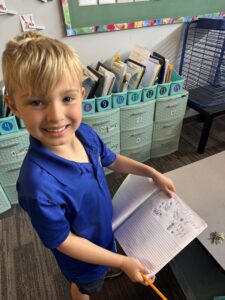
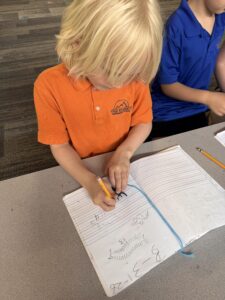
We are excited to share that we have classroom caterpillars and ants! Our unit of study for the past couple of weeks has been on life cycles, and we were fortunate enough to receive some insects for our class. We observe them daily as they change and go through each cycle. Earlier last week, we read the classic tale of “The Very Hungry Caterpillar” by Eric Carle and made connections to the caterpillars in our classroom. Although we couldn’t see the caterpillars in their eggs, we noticed a significant difference in size over the past few weeks. We also read a non-fiction text about butterflies, which gave us more details about their life cycle. We were able to use our knowledge of asking questions and looking more closely at illustrators to get more information from both read-alouds.
– A butterfly’s body is made up of the head, thorax, and abdomen
– Butterflies have two eyes, two antennae, six legs, four wings, and one proboscis
The butterfly’s life cycle includes four stages:
1. Egg: A butterfly or moth lays a tiny egg on the leaves of a host plant.
2. Larva (Caterpillar): The egg hatches into a caterpillar that eats leaves and grows.
3. Pupa (Chrysalis/Cocoon): The caterpillar spins a protective casing around itself and enters the pupal stage. Inside the casing, it undergoes a remarkable metamorphosis.
4. Adult (Butterfly): The transformed creature emerges from its chrysalis or cocoon as a fully-fledged butterfly or moth.
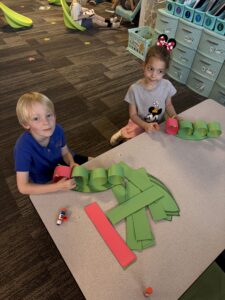
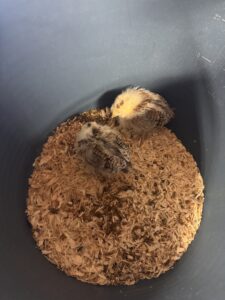
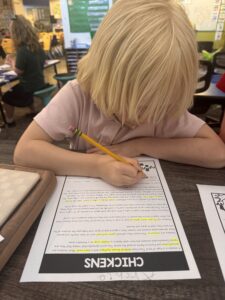
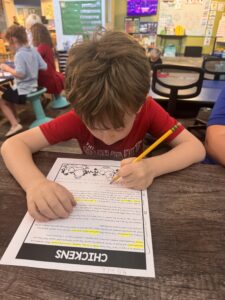
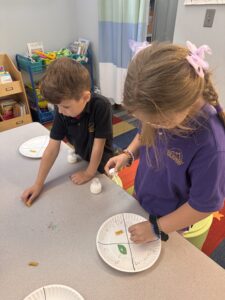
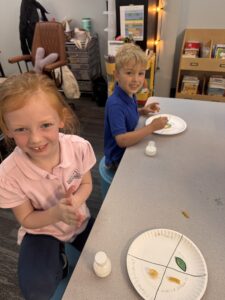
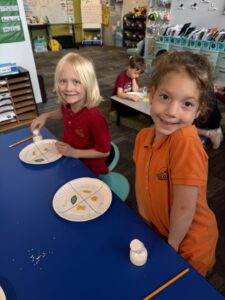
In addition to caterpillars, we also explored other insects and animal life cycles. We have learned about ants, chickens, turtles, and more. Additionally, we have connected other areas of learning to our unit on life cycles. We completed a caterpillar project that reminded us of 3D shapes, created a life cycle chart of a butterfly using noodles and a paper plate, read a nonfiction article on chickens with text features and learned the different between a hen and a rooster, played a buggy bingo game, and we were also lucky enough to have chicks visit our classroom while we learned about the chick life cycle. Thanks to Mrs. Walter! We enjoyed our unit on life cycles so far and are excited to dive more into plant life cycles this week!