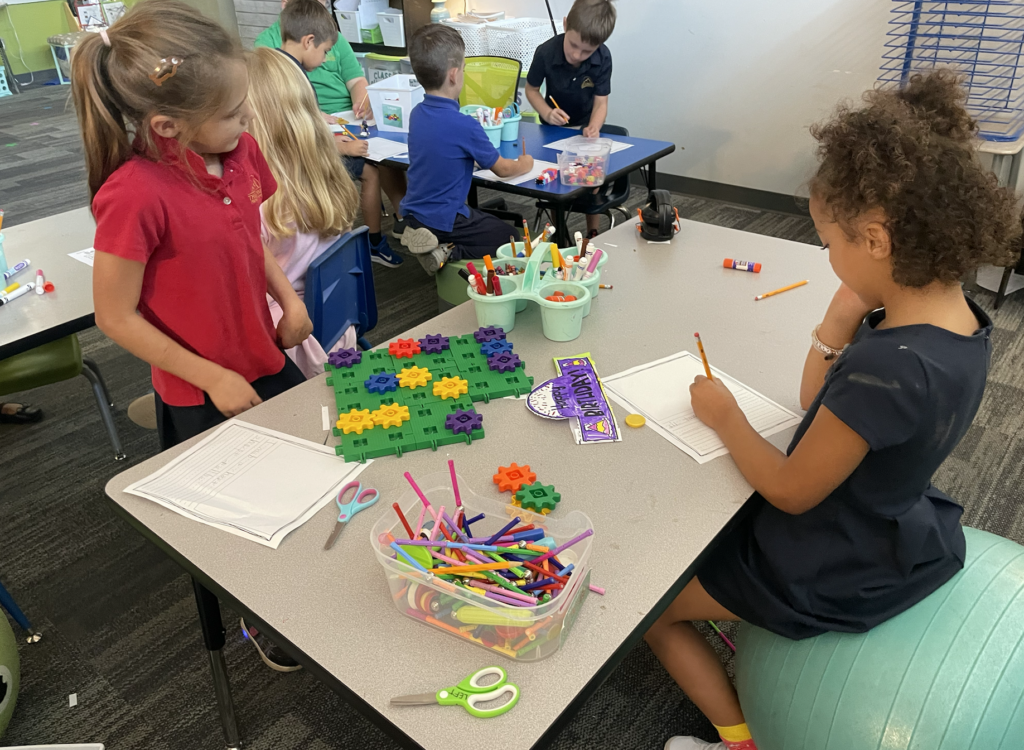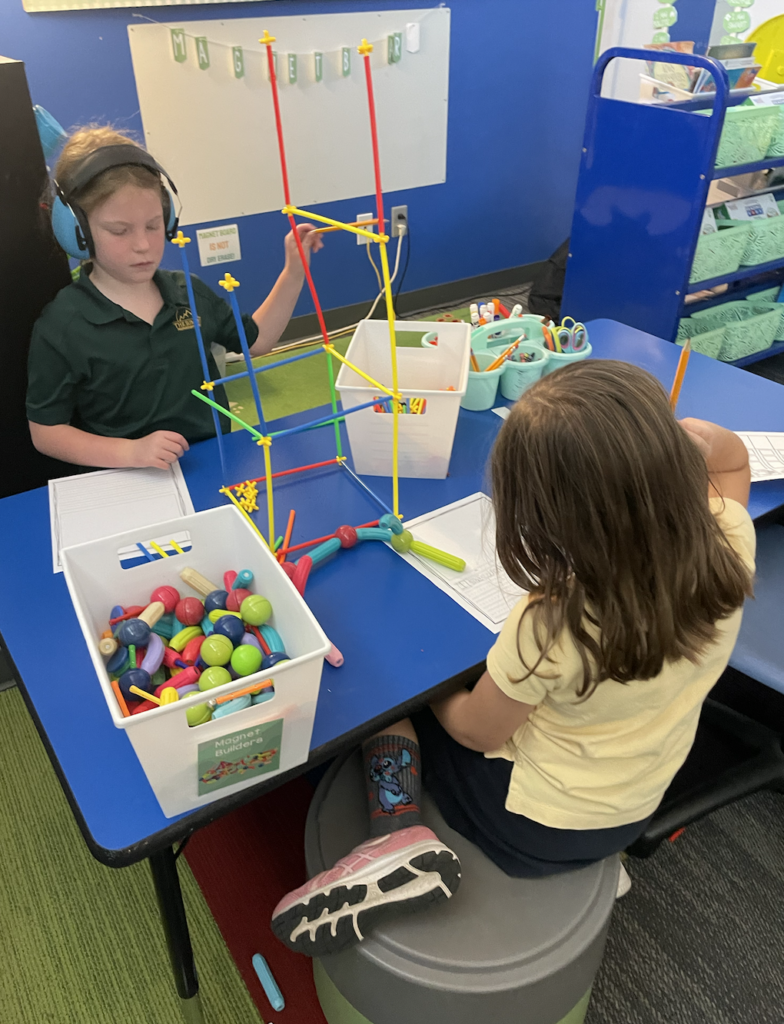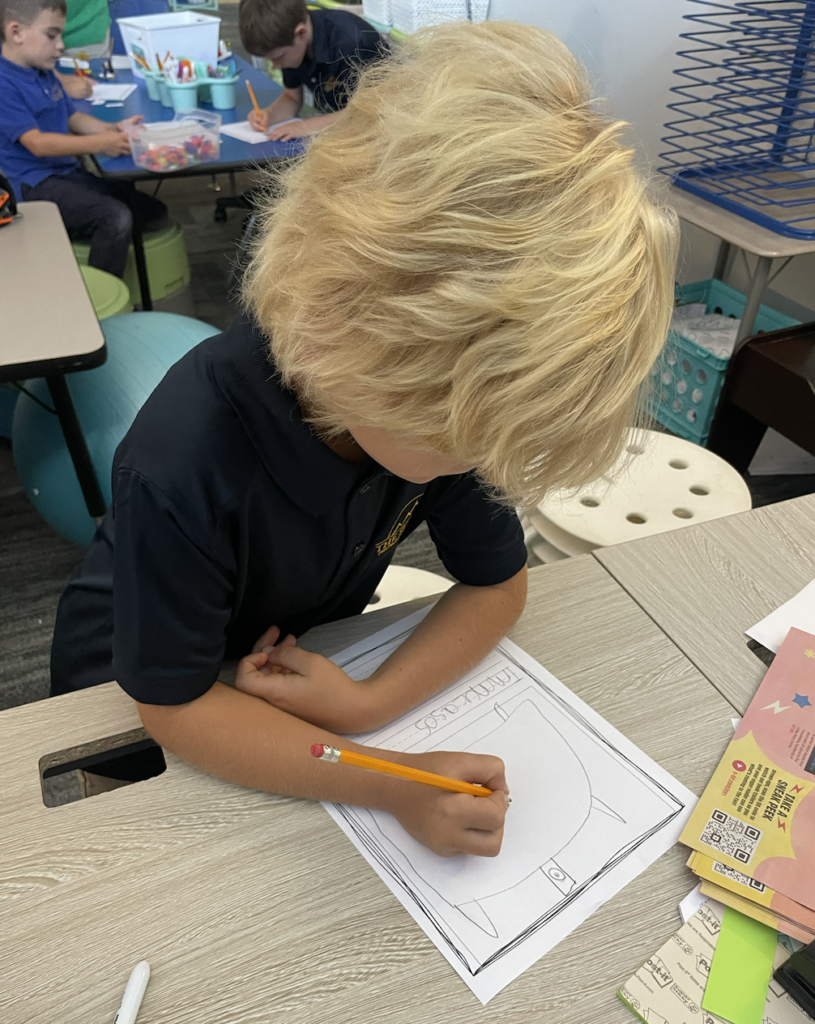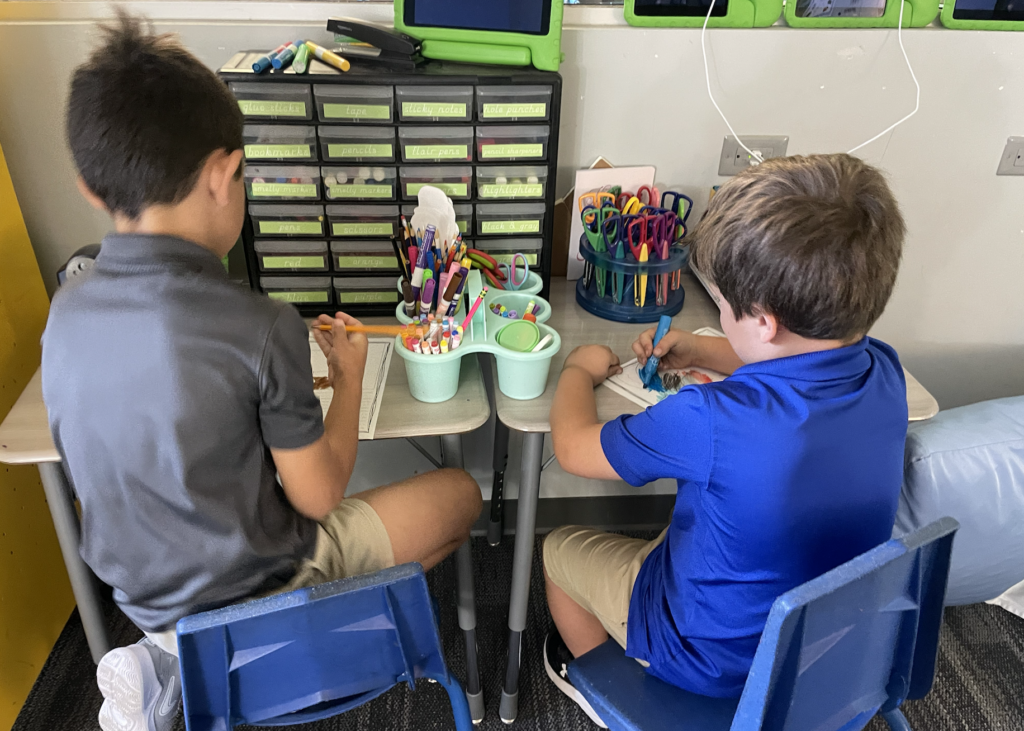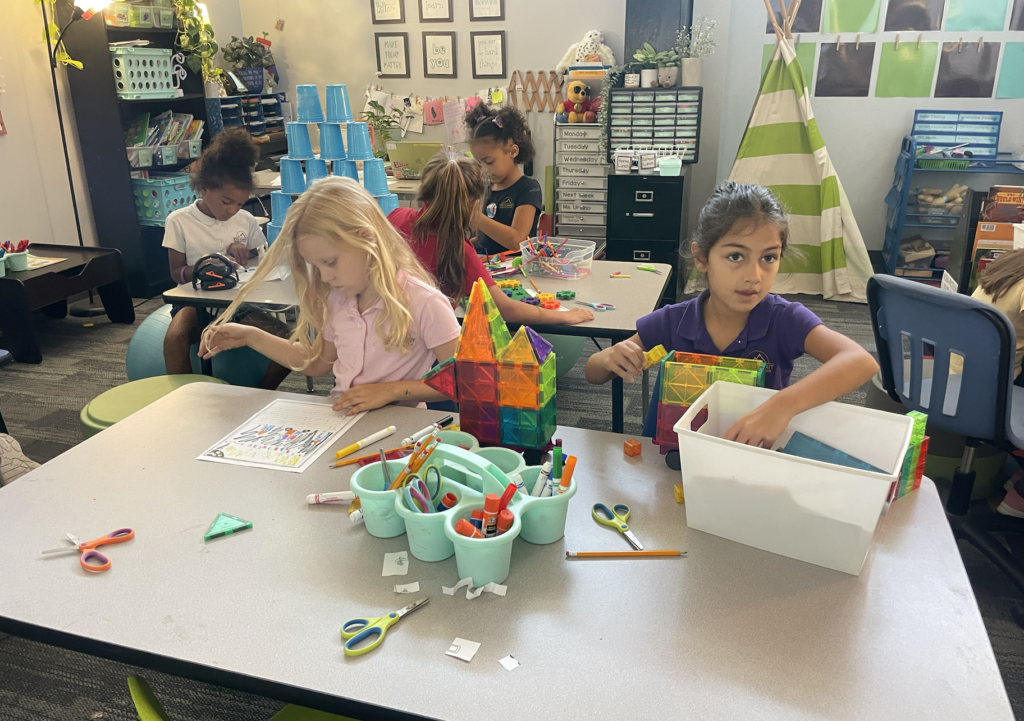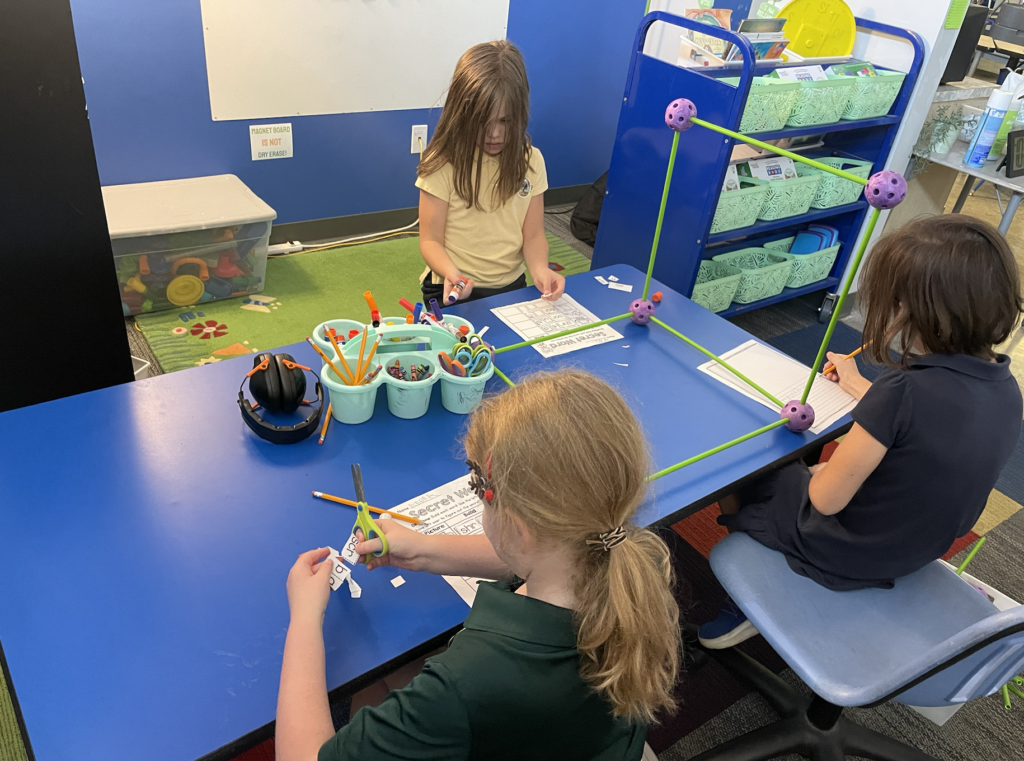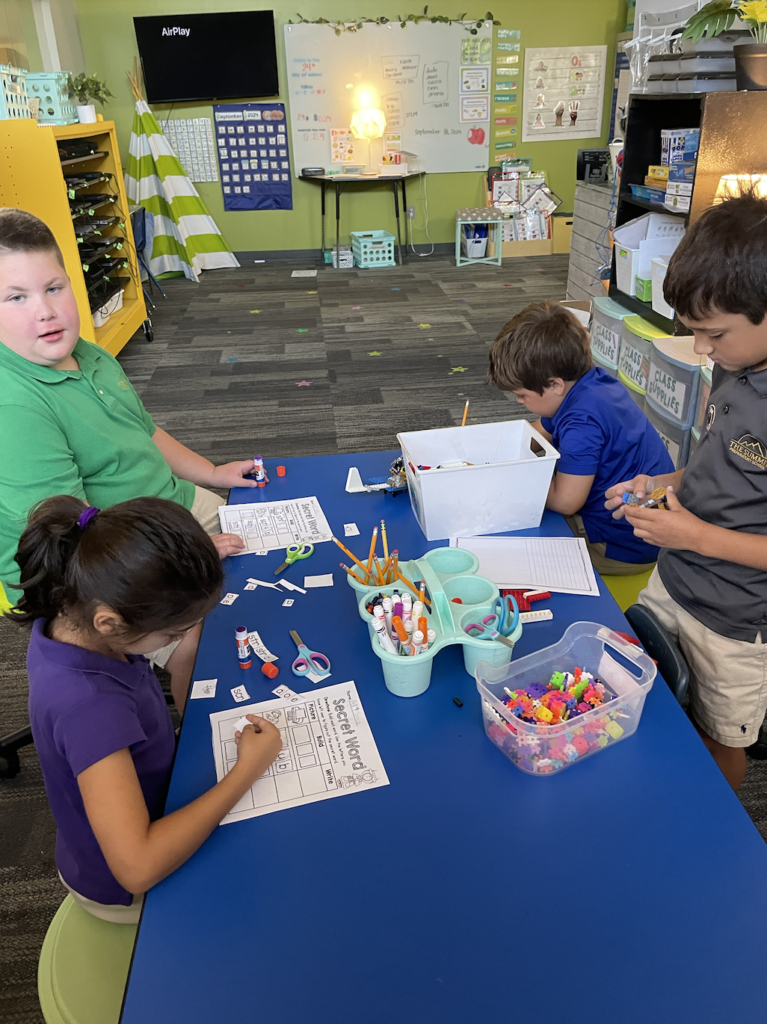


As part of our daily literacy stations, yesterday students engaged in a hands-on learning experience that combined creativity, building, illustrating, and writing – what we call STEM Writing. Students had 15 minutes to build anything they could imagine using STEM materials like blocks, LEGOs, connectors, gears, and Magnatiles. After that, they worked to write a story about their creation and illustrate it. It was a wonderful blend of engineering, art, and literacy skills.
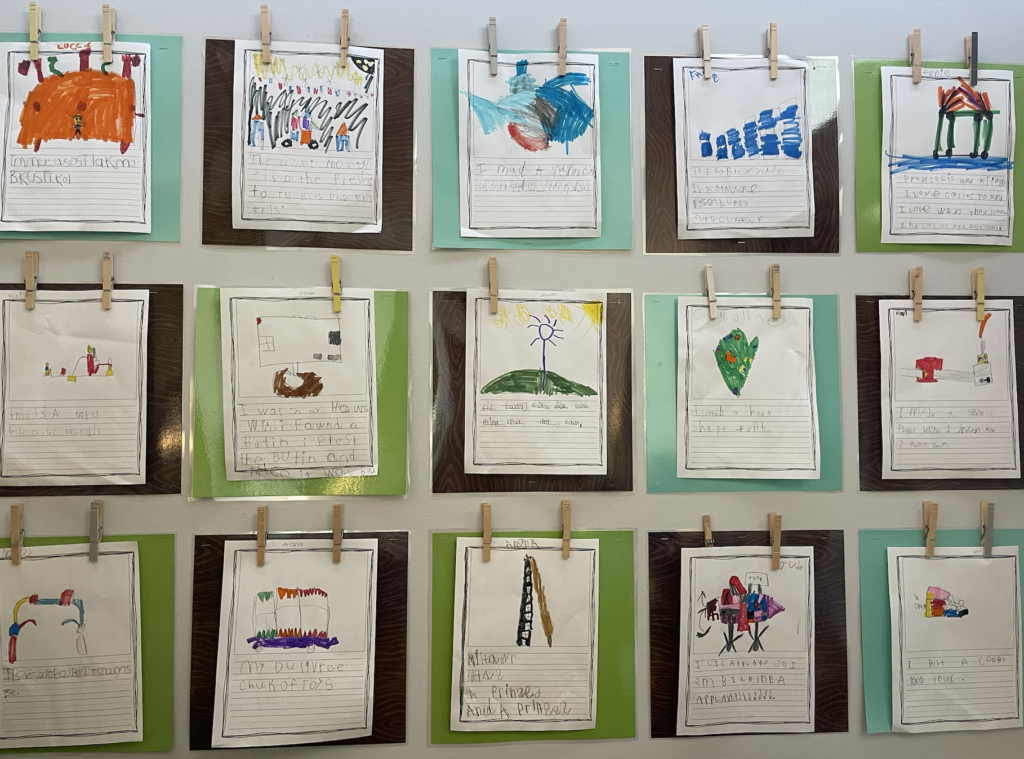
Students got creative and built a wide variety of creations including space planes, princess castles, and even magic buttons. Once the building was complete, illustrations were added, with details including realistic shapes and colors.
The most exciting part came during the writing of stories about their creations. This time was used to practice phonetic spelling, which is a developmentally appropriate stage of writing for most students at the beginning of first grade. At this stage, students still have many spelling patterns to learn, so they must use their known patterns to represent the sounds they hear in a word.
Phonemic awareness is the ability to recognize, manipulate, and work with the individual sounds, or phonemes, within spoken words. We practice phonemic awareness skills as a whole group every day, breaking apart the sounds in words through a wide variety of activities. This practice focuses only on the sounds within the words, not the letters that represent these sounds. Research shows that strong phonemic awareness skills in first grade are highly predictive of future reading success.
Phonemic awareness skills are essential to writing. When using phonetic spelling, students use their phonemic awareness skills to break the word down into all its sounds and use a letter or digraph to represent each sound. For example, a student might listen to the word “castle” and write “casl,” capturing the key sounds they hear. One student, after building a truck, wrote, “My dulivree chuk of toys,” using phonetic spelling to sound out the words. Phonetic spelling at this stage allows them to explore writing with confidence while applying known spelling patterns, practicing their handwriting, grammar and mechanics.