
After learning all about mammals, first graders are now learning about amphibians. We have discovered that amphibians have each of the following characteristics:
- vertebrates
- cold-blooded
- lay eggs (oviparous)
- live on land and in water
- have smooth, moist skin
- can have lungs or gills and many can breathe through their skin underwater
We compared the characteristics of an amphibian to a reptile to distinguish between these similar-looking animals. This was a great opportunity to explore Venn diagrams. We discovered that, while both types are vertebrates, cold blooded and lay eggs, they have many distinguishing features. While reptiles have dry, scaly skin, amphibians have smooth moist skin. Additionally, reptiles have lungs, but amphibians can have lungs or gills or breathe through their skin. Amphibians go through a metamorphosis from egg to adult, while reptiles hatch in a smaller version of their adult form. First graders used their knowledge of the characteristics of both amphibians and reptiles to distinguish between each and sort a list of animals into the two groups. They also used a Venn Diagram to compare the characteristics of each type of animal.
After learning about their characteristics, we explored some interesting types of amphibians. We looked first at the poison dart frog. We found it interesting that, since the poison dart frog lives in the rainforest, it does not lay its eggs in or live in a body of water. Instead, it lays its eggs in small collections of water on large leaves in the rainforest. They keep their bodies moist from the humidity and rain that naturally occurs in the rainforest. We were also curious about how poison dart frogs got their names. They were named for their use by native people of Central and South America who would use the poison from the frogs on the tips of their darts to aid them in hunting. First graders noted their bright colors and that they used these bright colors as protection, as it warns predators that they are poison.
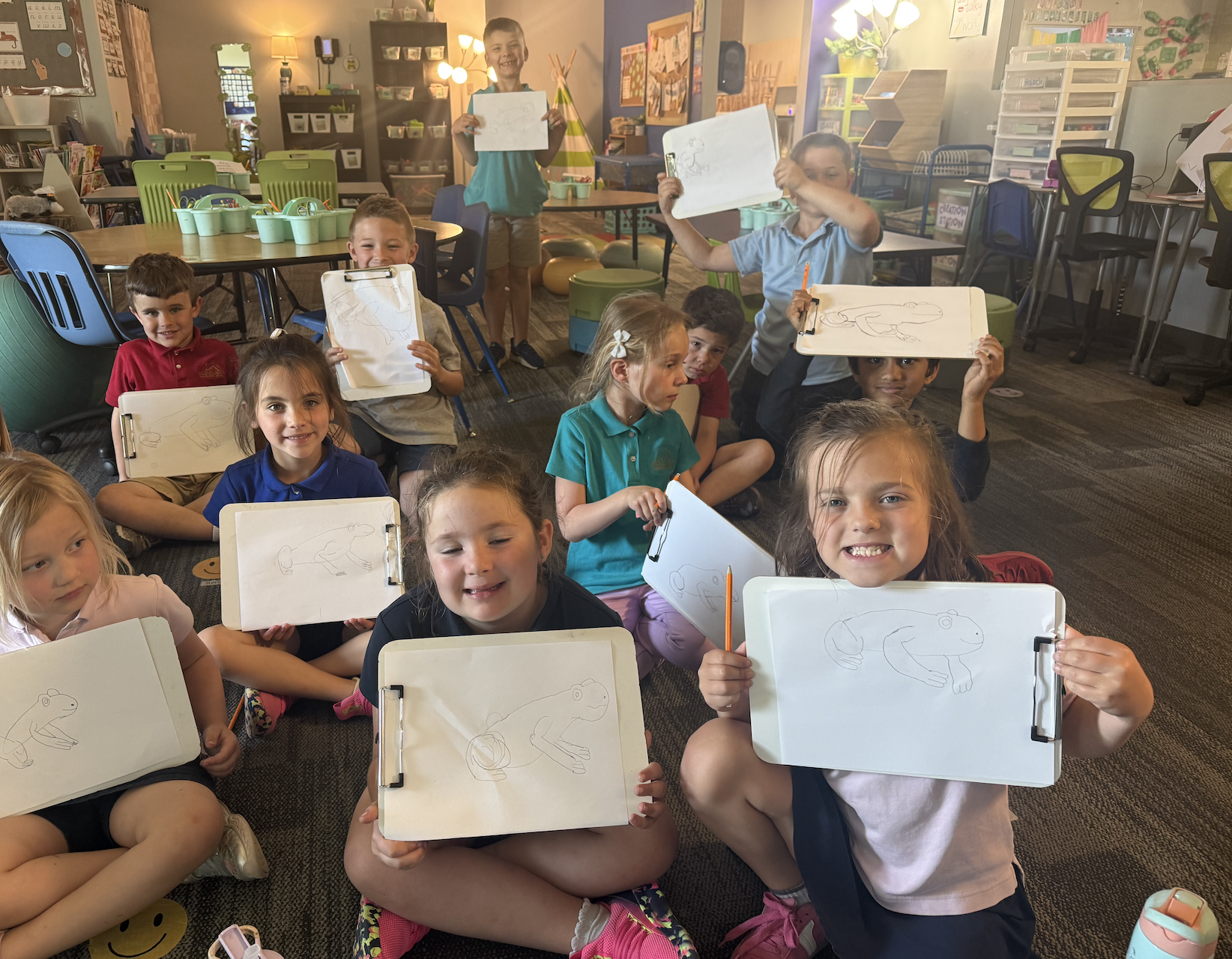
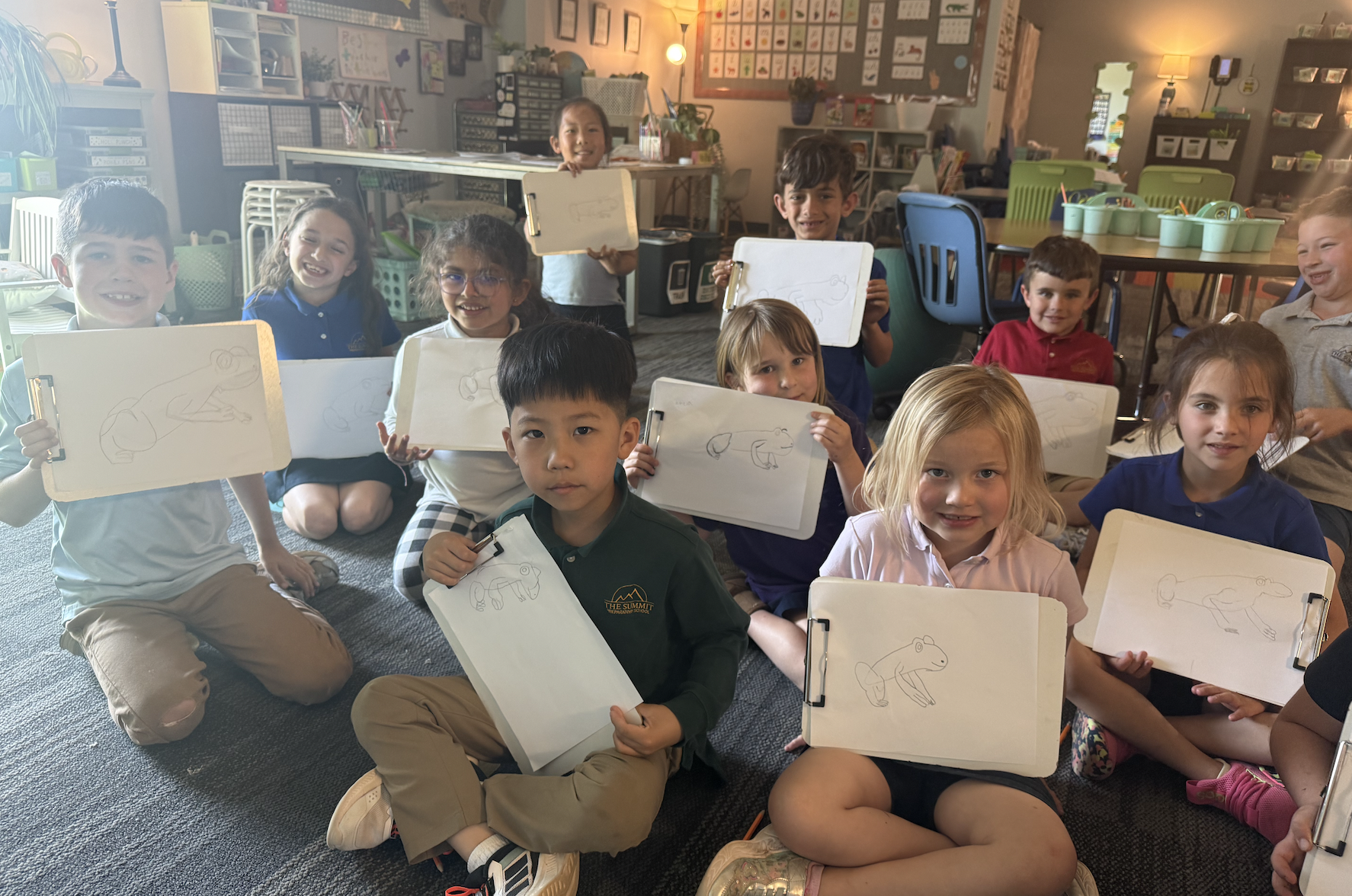
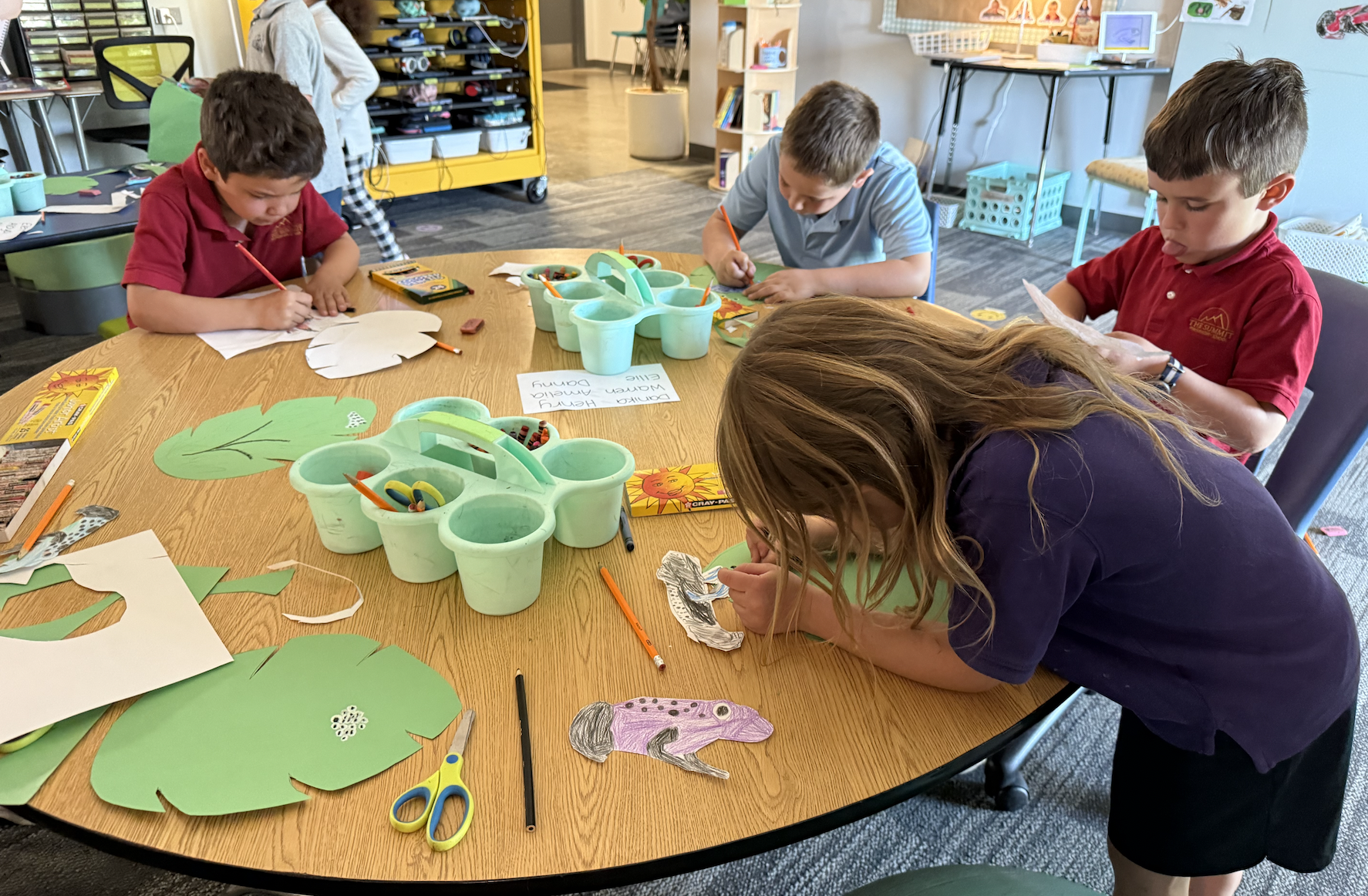
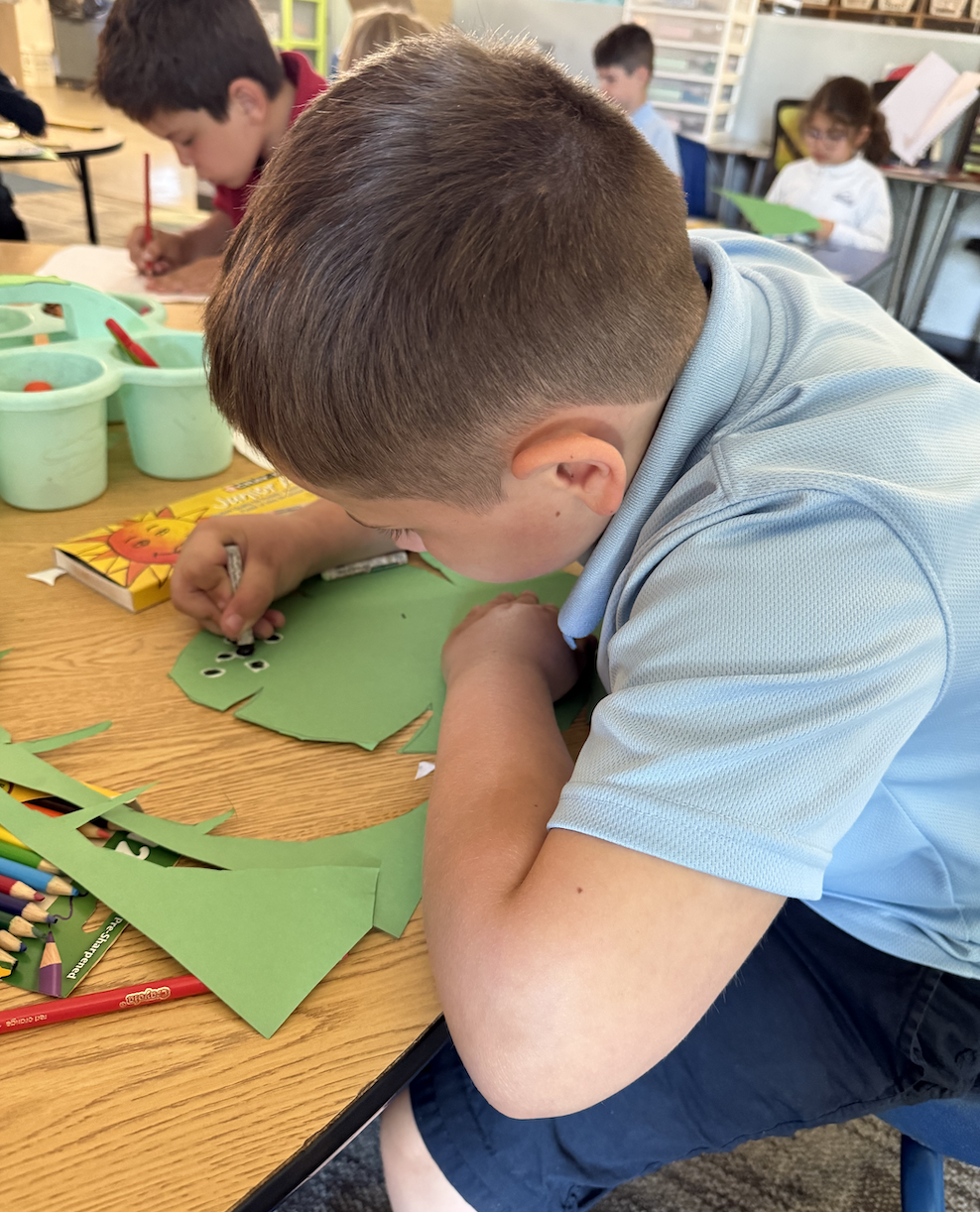
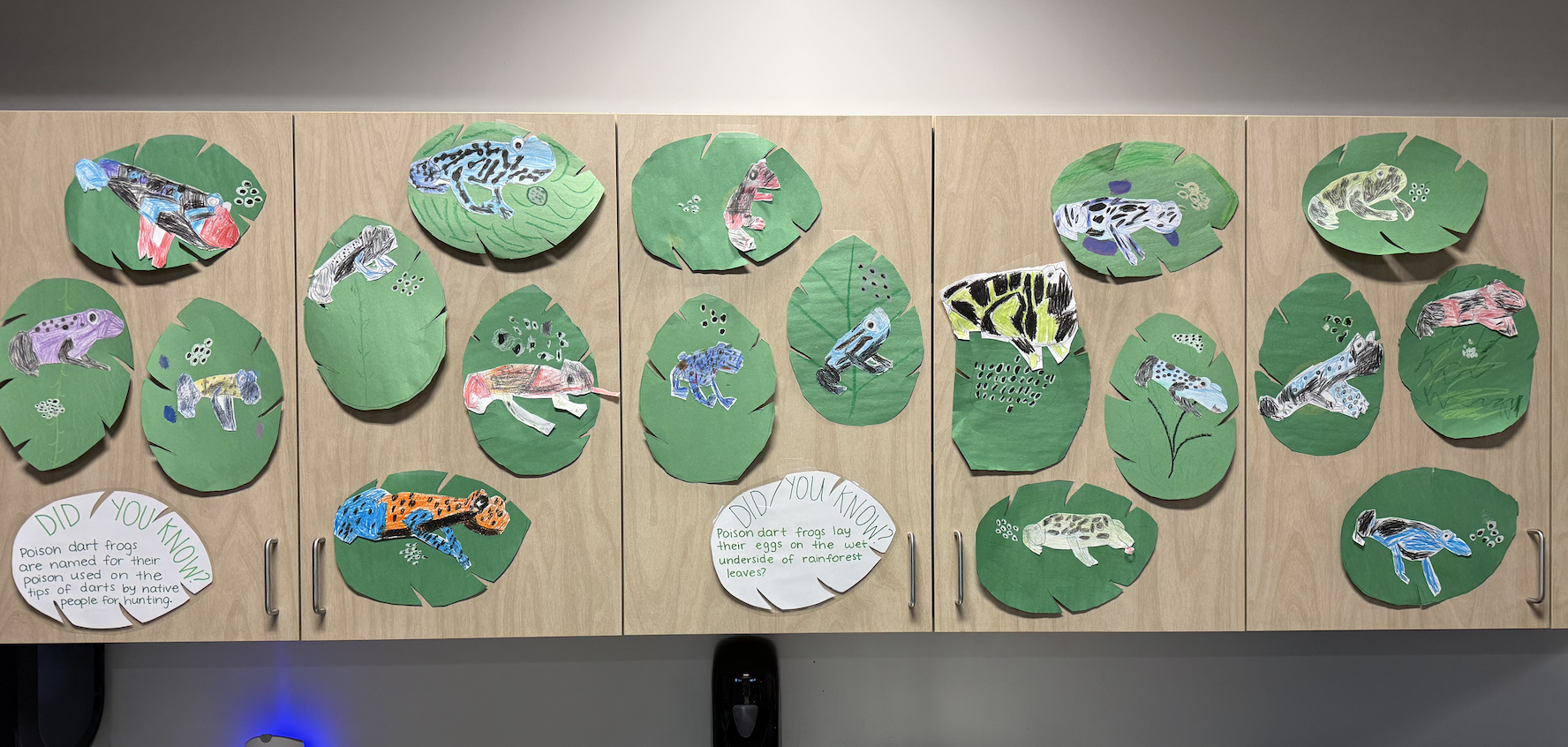
We created an art project of a poison dart frog by starting with a whole group directed drawing. Directed drawings are great for practicing direction following and fine motor skills. Next, students colored their drawn frog with a color pattern typical of a poison dart frog – black with bright color spots or blobs! Finally, they created a leaf for their frog to lay its eggs on just as it would in the rainforest. We viewed images of poison dart frog eggs on leaves and noted that they look clear with a black circle in the middle. The black circle is the first stage of what will later become a tadpole! First graders used oil pastels to add 5-40 frog eggs to their leaf, as this is the range of eggs that poison dart frogs typically lay at one time.
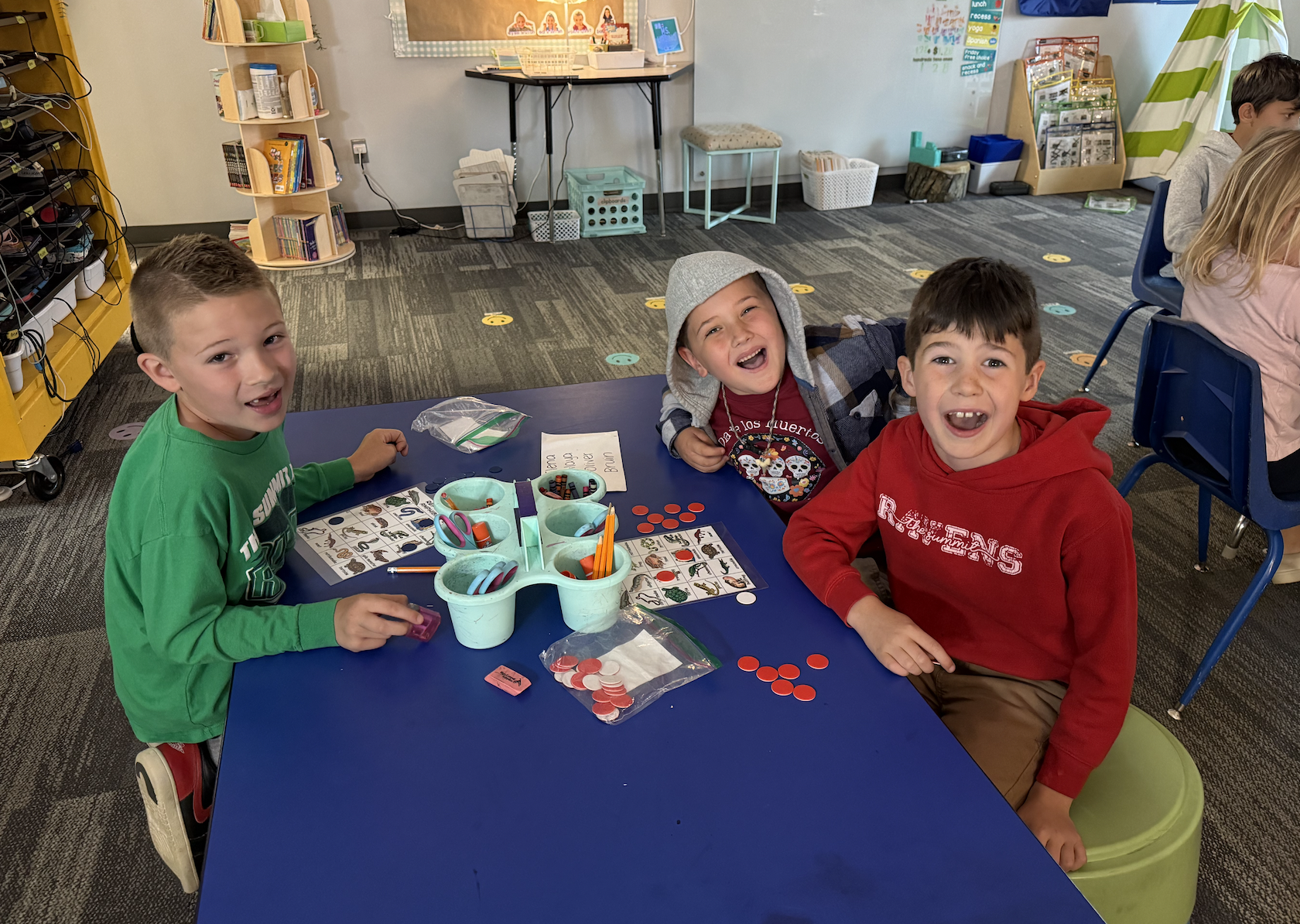
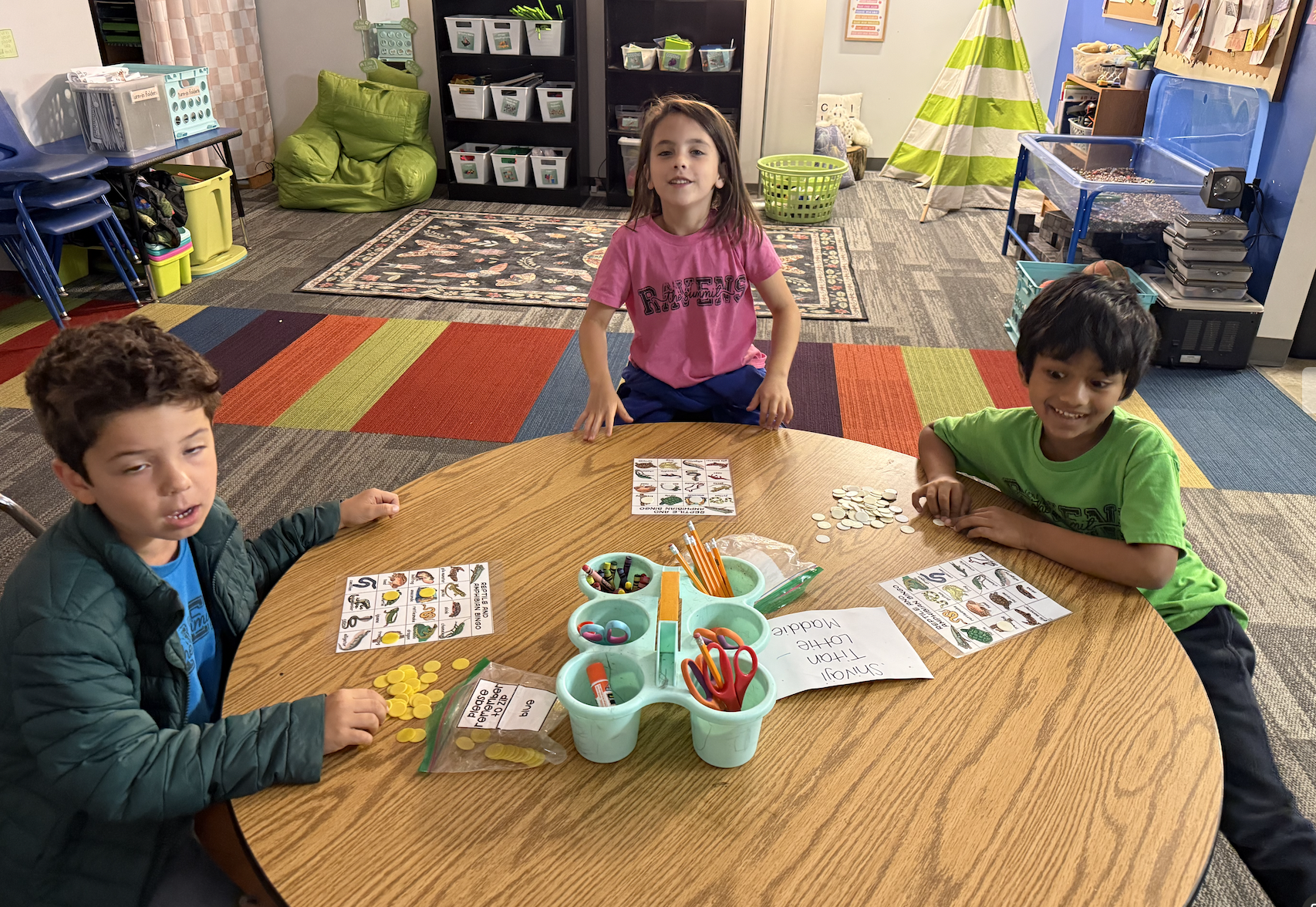
We continued to familiarize ourselves with amphibians by exploring some videos about them and their life cycles, and then playing amphibian and reptile bingo! A class favorite amphibian was the axolotl. Although all of us previously thought it was pronounced “ax-O-lot-l”, we learned that it is actually pronounced “aw-shuh-lot”! Our BINGO game helped us identify the names of the creatures and then discuss their features to decide as a group if they were classified as a reptile or an amphibian.