
There are many reasons telling time is a difficult skill for many students to master. Telling time is quite an abstract skill and students have very little schema to support their understanding. Students can see how tall someone is, they can weigh a rock, and they can fill a tablespoon of water, but they can’t see, touch, or weigh time. They can’t go into a store and buy some minutes. Also students have a warped view of time. When a parent says “Just a minute” or “Give me a second.”, Is it really just a minute or a second? Today’s kiddos use digital clocks—. Students must practice, practice, practice with an analog clock.
It is hard to quickly read a clock if you can’t look at the 7 and think “35.” Students must be comfortable counting by 5s. They hear the word “Quarter” and think “25” because they are used to working with money. This is another abstract concept that leads to difficulty telling time. A fraction lesson is required to teach understanding of a quarter to and quarter past, what if there is no understanding of fraction concepts?
Many students experience big hand/little hand confusion. With practice, students figure out that the big hand is minutes and the little hand is hours. One trick I use that is quite helpful, is telling them that “minutes” is a longer word so think longer hand. That gives their mind something to wrap itself around. Reading the hour incorrectly is a very common struggle amongst students as they learn to tell time. Grasping the concept that the hour hand moves gradually from one hour to the next as the minute hand makes its way around the entire clock is so confusing. Students don’t understand that at 6:30, the little hand is halfway to the 7 and that by 6:50, it’s almost at the 7. Writing the time incorrectly is also a common mistake. There are so many ways to confuse this; for example, “7:5” for “7:25” or “5:12” for “5:00”.
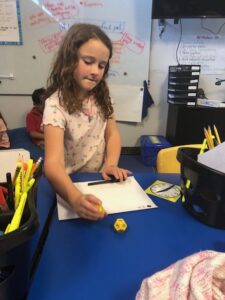
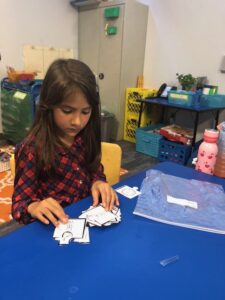
We increase our understanding of telling time with many hands on learning activities. Take a look!