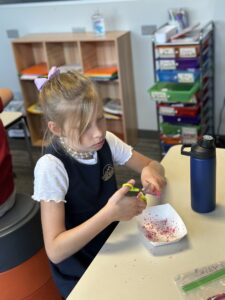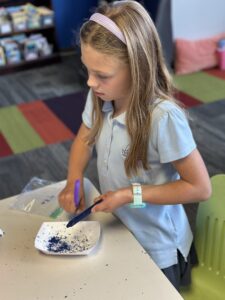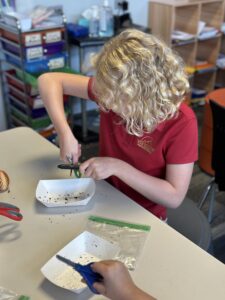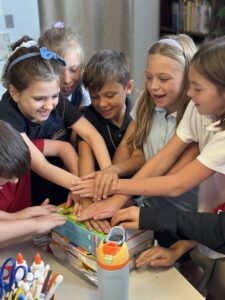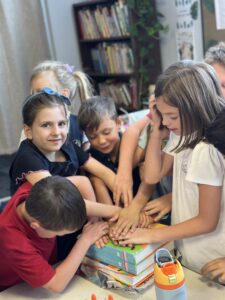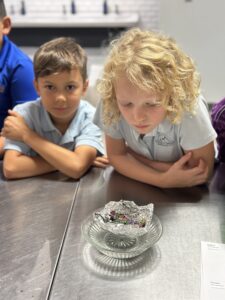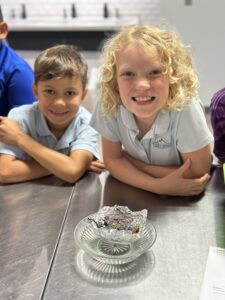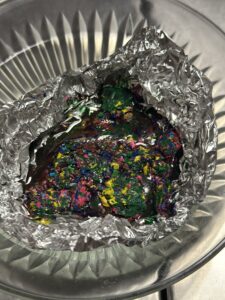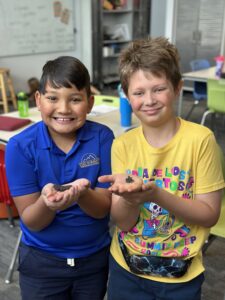

This week in science, third graders became geologists! We’ve been learning about the three main types of rocks: sedimentary, igneous, and metamorphic. This week we did a hands-on experiment using crayons to model how each type of rock forms.
We began by shaving pieces of crayons to represent weathering. Just like wind, water, and ice break down rocks into smaller pieces in nature, we shaved our crayons into tiny fragments. We also talked about erosion – how materials like sand, soil, shells, fossils, or even pieces of other rocks can be carried away and deposited elsewhere.
-
Sedimentary Rocks: Students pressed the crayon shavings together inside foil, using heavy books for pressure. This showed how layers of sediment get compacted over time to form rocks like sandstone.
-
Metamorphic Rocks: Next, we placed shavings inside a foil “boat” and floated it in hot water. The heat softened the wax, and then we pressed the pieces together. This demonstrated how heat and pressure deep underground can transform existing rock into metamorphic rock, such as marble.
-
Igneous Rocks: Finally, we melted the crayon shavings completely and let them cool. This showed how igneous rocks, like obsidian, form when melted rock (magma or lava) cools and hardens.
Throughout the week, we discussed real-world examples of each rock type, including sandstone, marble, and obsidian. The students loved seeing their “rocks” form right before their eyes, especially watching the crayons melt and then pressing them together!
This experiment helped us understand that rocks are always changing and that each type tells a story about the Earth’s processes.