
In Spanish, first graders kicked off their trimester 3 country of study this past Friday. After studying Panama in trimester 1 and Equatorial Guinea in trimester 2, we will finish out our year studying the culture of Paraguay. We started our unit by boarding our classroom “plane” and leaving our pretend school airport to fly all the way to this South American country. Our in-flight entertainment included some introductory pictures of some of the cultural elements of Paraguay, including the food, the flag, a traditional dance, and the national animal.
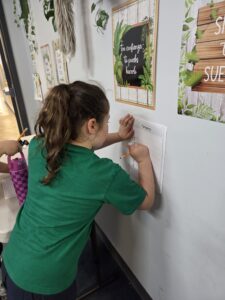
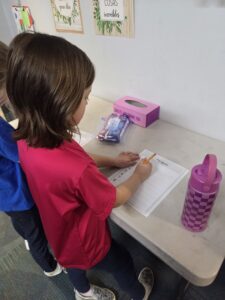
Once our pretend plane landed in pretend Paraguay, students were tasked with finding these cultural elements hidden around the room and recording what they found on their own paper. This learning activity was a great way to introduce students to Spanish spelling patterns while also helping them to practice reading new Spanish words and connecting them to a new real-world culture.
Cultural education is a huge part of the school’s Spanish program, as it teaches students how diverse the world is and shows how closely culture and language are connected. Learning about traditions, foods, celebrations, and daily life in Spanish-speaking countries helps students understand how the language is actually used by real people. It also helps students develop respect and appreciation for cultures that may be different from their own. By including cultural learning in Spanish class, students gain a deeper understanding of the language and the diverse communities that speak it.
Señora Cordel