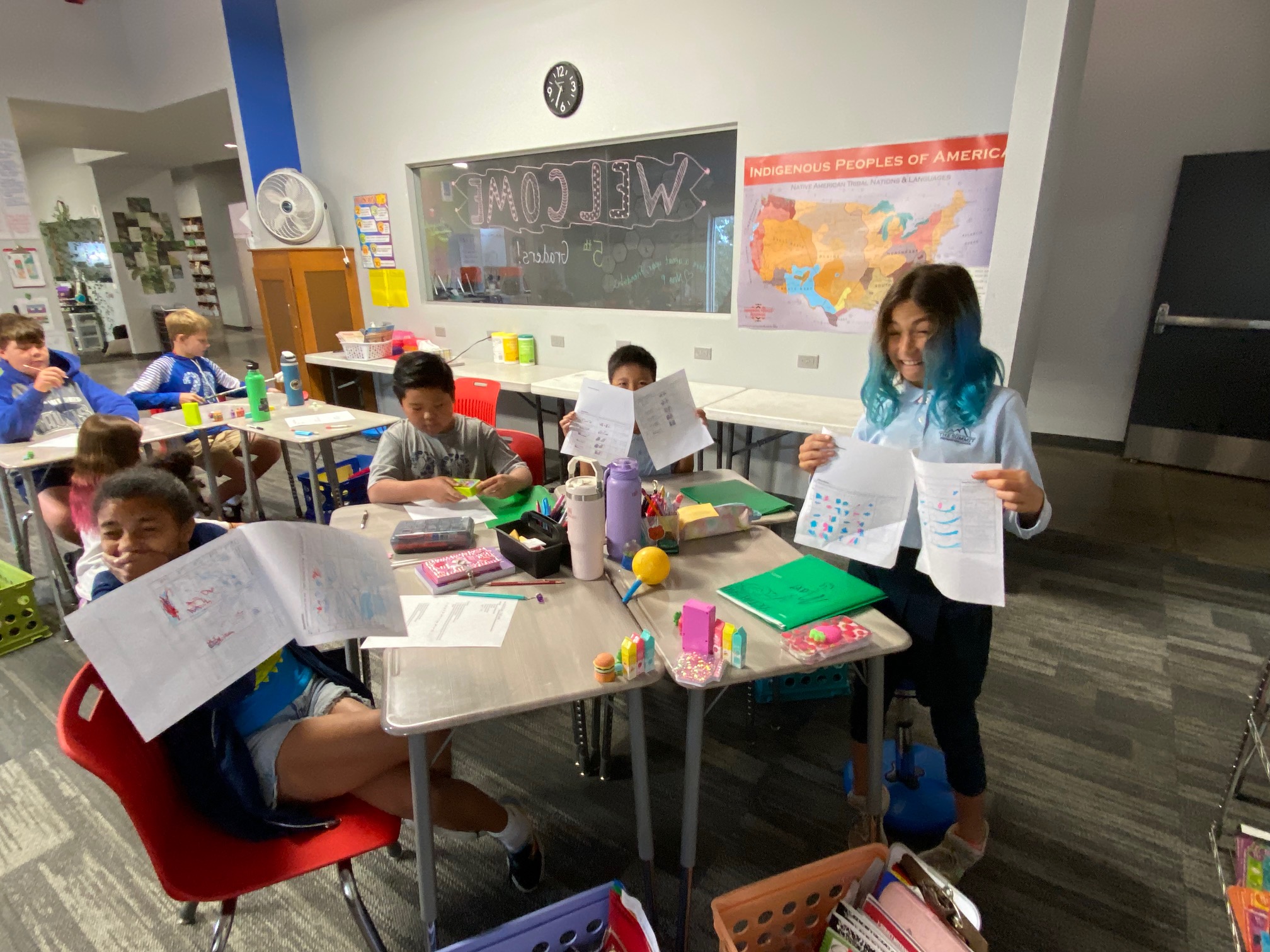

The fifth graders conducted an experiment on Tuesday to try to answer that very question. They were given a procedure that would produce a convection current (current made by hot water rising, cool water falling) in a plastic tub. The moving water in the tub would represent the way that rock moves in the mantle layer of Earth.
The students worked together to decide on materials that would mimic tectonic plates on top of the mantle. Students worked on their procedure-following, observation, and sketching skills as they watched and recorded how their currents developed in the water and moved the tectonic plates on top.


Today, the students completed writing their lab reports. They summarized the problem and procedure. They discussed their results, commented on if their hypotheses were supported, and analyzed how their model helped them to understand how convection currents could move tectonic plates. At the end, they reflected on what they could do to improve the experiment or build upon it if they were asked to do it again. This reflection is an important part of the scientific process, showing students how experiments commonly lead to more questions, starting the scientific cycle over again.