

What was Squealer’s most offensive piece of propaganda he used to manipulate the animals on Animal Farm? I asked students this question and received a variety of answers – the initial scene with the milk and apples (scholar Paul Kirschner agrees this is a turning point in the story), the one time Benjamin read the side of the truck driving Boxer away, his rewriting of the commandments, and more.
We dissected a few of these in terms of the logos, ethos, and pathos used; which appeal dominated; and why this appeal dominated. Now, students are applying this rhetorical analysis in researching and writing about a piece of propaganda of their choosing.
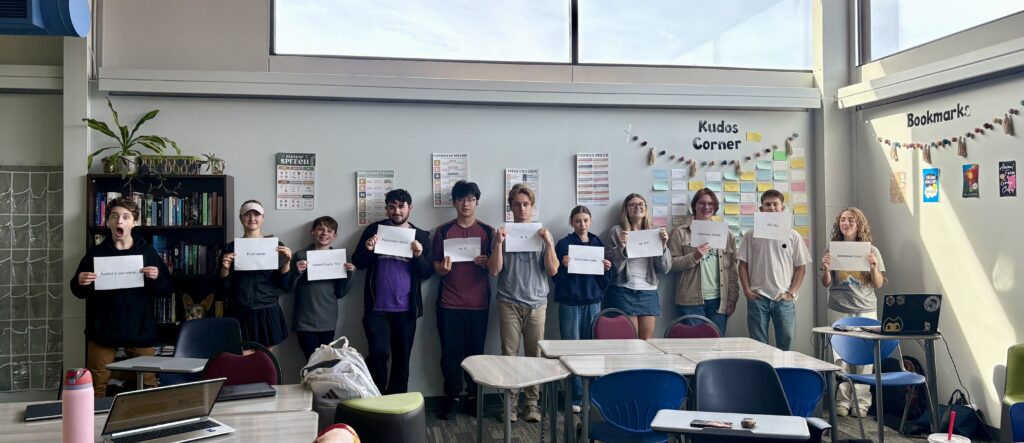
Because scholarly research is required in this analysis, we used our kinetic energy and collective knowledge to put in order the different pieces (or containers) of an MLA-formatted Works Cited entry for a scholarly journal article. While yes, there are a variety of tools that can create these entries for us, how do we know if what is generated is correct if we cannot recognize what they should look like? Citations – in a variety of styles – will be revisited throughout the year.
To engage with your student, you could ask them:
- which moment from Squealer they found most offensive;
- which two pieces of propaganda they found in their research;
- which piece of propaganda they will be analyzing; and
- why they believe this piece of propaganda was successful – or not.
Work Cited
Kirschner, Paul. “The Dual Purpose of ‘Animal Farm.'” The Review of English Studies, vol. 55, no. 222, Nov. 2004, pp. 759-786. JSTOR, https://www.jstor.org/stable/3661599. 15 Nov. 2025.